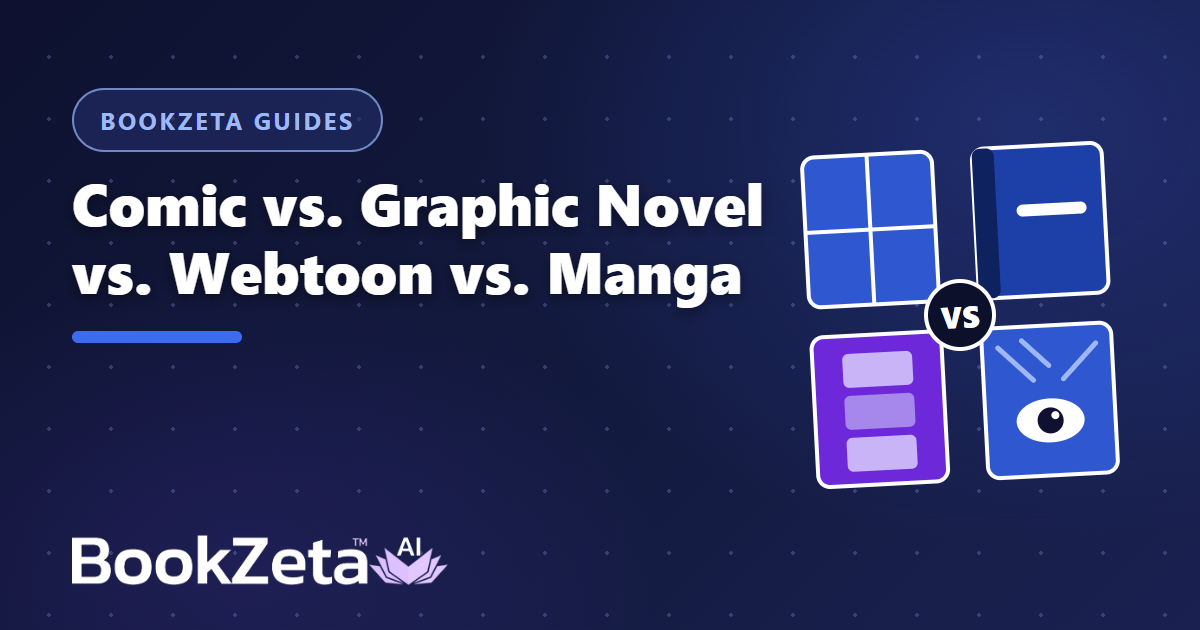
The difference isn't just vocabulary — each format has its own length, reading pattern, audience, and publishing path. If you're about to create a visual story, choosing the right container matters as much as the story itself. Here's the practical breakdown.
The four formats at a glance
| Format | Typical length | Read on | Signature trait |
|---|---|---|---|
| Comic book | 20–32 pages/issue | Print & digital pages | Serialized issues, page-turn pacing |
| Graphic novel | 100–300 pages | Print & digital pages | One complete long-form story |
| Webtoon | Endless vertical episodes | Phones | Scroll-based pacing, episodic hooks |
| Manga | Chapters → collected volumes | Print & digital pages | Japanese visual grammar, often right-to-left |
Comic book: the serial
Comics are built around the issue — a short episode ending on a hook, page-turns used for reveals. Choose this if your story is episodic, action-forward, and you want to release as you create. Make a comic book →
Graphic novel: the complete story
A graphic novel is a full narrative arc in one volume — the format bookstores, libraries, and awards take most seriously. It rewards deliberate pacing and a story with a real ending. Choose this for memoir, literary fiction, or any self-contained epic. Make a graphic novel →
Webtoon: built for the phone
Webtoons ditch the page entirely: one vertical strip, paced by scrolling, published in bite-size episodes. It's the fastest-growing comics audience in the world and the lowest-friction way to build readers, since everyone already has the reading device in their pocket. Choose this for romance, drama, and serialized genre fiction aimed at mobile-native readers. Make a webtoon → — or read our full webtoon guide.
Manga: a visual language, not just a location
"Manga" describes Japanese comics, but creators worldwide now work in manga's visual grammar: expressive character acting, speed lines, screen-tone shading, decompressed action. If your influences are manga, your readers will expect that language. In BookZeta, manga is one of 40+ art styles available in every graphic mode — so you can make a manga-styled comic, graphic novel, or webtoon.
How to actually choose
- Where is your audience? Phone-first → webtoon. Print/bookstore ambitions → graphic novel. Serial genre readers → comic.
- Is your story episodic or complete? Hooks every few pages → comic/webtoon. One arc → graphic novel.
- Still unsure? Start webtoon — episodes are short, feedback is fast, and a hit can be re-cut into pages later.
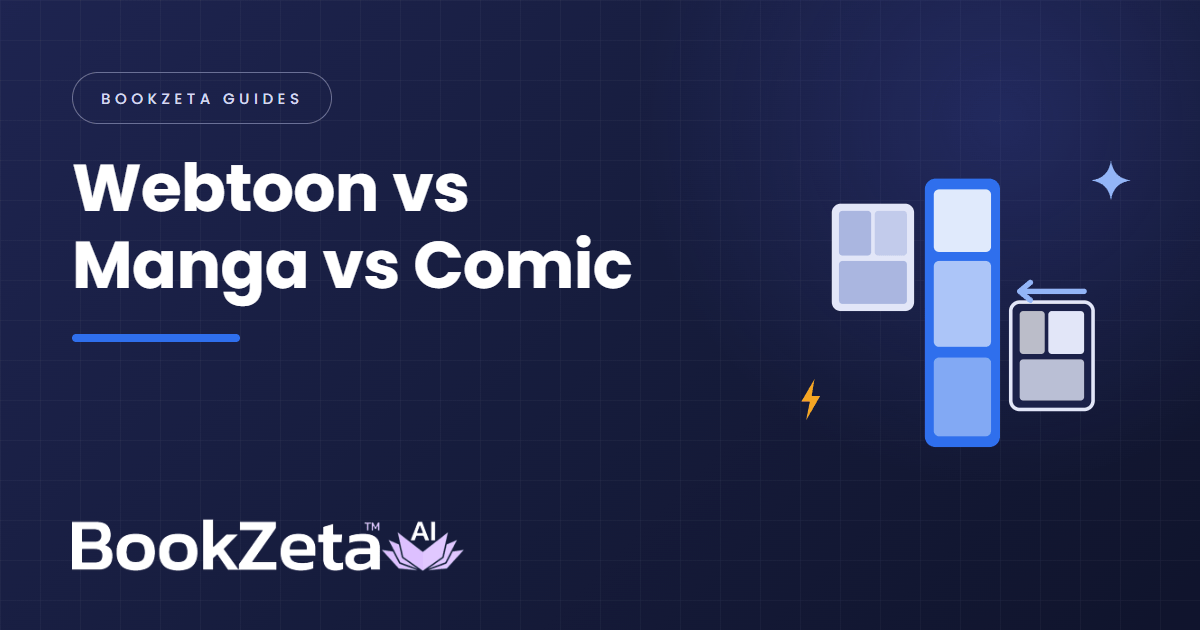
Leaning towards vertical scroll? Webtoon vs manga vs comic goes deeper on the webtoon side, and the webtoon creator shows what you can build.
The good news: in BookZeta the same characters, settings, and series bible work across every format — so a format switch doesn't mean starting over. Try them all free.